Monday, July 08, 2013

Big Data, Apollo and Daphne

Over on oomkenscom, a small piece about Big Data...

Some see it as a huge, transformational boon for mankind, others as a fatal step to ever more intrusive state control - others still dismiss it as relatively meaningless.

All in all, it's probably a mix of each of those things.

Bernini's Apollo and Daphne
It reminds me of the legend of Apollo and Daphne, whom Eros confounded - with an arrow of love for Apollo, and an arrow of hate for Daphne.

When Apollo came close to catching Daphne, she begged her father Peneus to change her form, to prevent her being ravished. He duly turned her into a laurel tree - a tree Apollo tended with love and devotion, making her evergreen, using her leaves for honourable, sacred wreaths.

Normally interpreted as an alegory about lust and chastity, the myth can also be seen as a message about the state's lust for information about its citizens, and how this is resisted by the people, driving them to change the form of the data they share.

This interpretation implies that the people's actions will provoke a change of heart in the state, a perhaps unrealistic outcome.

But the power of myth illuminates the eternal better than enlightening us about the future - predictive outcomes (its advocates claim) are in the sphere of Big Data...

Friday, May 31, 2013

Latest Headlines from Germany

A selection of today's headlines:

1. "Wir Deutschen gelten als hartherzig" ("We Germans are seen as hard-hearted")

Says Martin Schulz, the President of the EU Parliament. Citing southern European countries' dissatisfaction with the draconian spending cuts Germany insists on to keep the €uro show on the road, he claims they think of Germans as "hardhearted, insensitive, self-righteous and condescending."

When it comes to national stereotypes, Schulz lags way behind Silvio Berlusconi who, when Prime Minister of Italy, (in)famously informed him:


2. "Heidi Klum - eine Perfektionistin wird 40" ("Heidi Klum - a perfectionist turns 40")

Ambitious Heidi's fathomlessly popular model competition show reached its final yesterday evening. The show was disturbed when topless protesters invaded the stage and confronted the supermodel with slogans saying Heidi's Horror Picture Show:


Curious how the bared breast has been reclaimed as feminism's most potent weapon...

3. "Junge Männer Trinken Zu Viel" ("Young Men Drink Too Much")

Who knew?


(All headlines taken from this morning's edition of the Rheinische Post)


translating keyserling's waves

Eduard von Keyserling, portrait by Lovis Corinth, circa 1900

Eduard von Keyserling's masterpiece of literary Impressionism, Waves (Wellen), first published in 1911, has never been properly translated into English.

This is a great shame: the book's a great read. It's about a young, beautiful countess, Doralice Köhne-Jasky, who leaves her ageing count for a poor painter.

The novel portrays the relationship of the couple, now shunned by society, in the setting of an isolated resort on the Bay of Puck in the Baltic Sea. The gorgeous Doralice attracts much male attention as her love for the painter is slowly compromised in the mundane relaity of everyday life.

The plot's glancing concern with the cuckolding of an ineffectual aristocrat by his spirited bride foreshadows Lady's Chatterley's Lover (published in 1928) although Keyserling's style is far more impartial, subtler and more ironic than Lawrence's.

The novel is now being translated into English by Freddie Oomkens (coincidentally a descendant of the Köhn von Jaski's and a distant kinsman of Keyserling's) who reports on his work on oomkenscom.


Monday, May 13, 2013

Wagner Opera Censored for "Public Health"

Venus and Tannhäuser in a romantic clinch which sickened Düsseldorf opera-goers.

The Deutsche Oper am Rhein's controversial Nazi-era production of Tannhäuser was cancelled after its premiere in Düsseldorf on 4th May.

It has now been reduced to a concert performance.

In the director's staging, Venus, as an SS guard, first strips, shaves, then shoots a Jewish family of three, forcing Tannhäuser to join in the killing. In another scene, a glass crucifix containing naked victims is lowered as gas engulfs their writhing bodies, a graphic simulation of Nazi gas chambers.

The audience reacted with booing, walkouts and worse.

In the words of the Rheinoper's press office, the performance affected many in the public:
... both psychologically and physically with such evident stress that they had to seek medical treatment.
 (...sowohl psychisch als auch physisch zu einer offenbar so starken Belastung geführt haben, dass diese Besucher sich im Anschluss in ärztliche Behandlung begeben mussten.)

The Rheinoper press officer remarks:
After weighing up all the arguments we have concluded that we cannot justify such an extreme reaction to our artistic work.
 (Nach Abwägen aller Argumente sind wir zu dem Schluss gekommen, dass wir eine solch extreme Wirkung unserer künstlerischen Arbeit nicht verantworten können.)

The director, Burkhard Kosminski, said he was "shocked and speechless" at the decision to censor his staging of Wagner's masterpiece.

The Rheinoper's artistic director, Christoph Meyer, countered with reference to the responsibility to protect public health, adding: "In light of this responsibility, the opera management reject any accusation of censorship."

What a ninny Meyer is. Of course it is censorship. Censorship is always imposed in the interests of protecting some form of "public health" - and this kerfuffle in the 'Dorf is a text-book example of it in action.


Wednesday, May 08, 2013

"Nazi Bride" on Trial in Munich

Beate Zschaepe, 38, is standing on trial in Munich for her alleged role in the murders of nine immigrants and a German policewoman between 2000 - 2007. She is also accused of two bombings and fifteen bank robberies.

The case has spawned some unsavoury nicknames in the German press - "die Nazi Braut" (the Nazi Bride) for the accused, "die Döner Mörder" (the Kebab Killings) for her alleged crimes.

The expression "Nazi bride" was coined because Zschaepe was the only female in the National Socialist Underground cell accused of the killings. Her two closest male accomplices committed suicide in November 2011, having been arrested for a failed bank robbery. After searching their burned-out truck, the police found a Ceska Browning handgun which had been used in all the killings, as well as a video showing the victims' bodies as a Pink Panther figure totted up the numbers.

This uncovered the trail to the murders and to Ms Zchaepe, who tried to burn down the apartment in the block where they had all lived (she is also being charged for attempted murder for that).

The expression "Die Döner Mörder" was coined because seven of the victims were Turkish, and one Greek, and some of them ran Kebab takeaway shops in their adopted country. This coinage has led to anti-racist protests.

More controversy arose when the initial assignment of press seats to the trial didn't allocate a single place to Turkish media. This has since been corrected, but coverage in Turkey, where Chancellor Merkel has already been the butt of Nazi-linked smears, remains highly sensitive to any anti-Turkish aspects of the case.

The big questions are:

 - whether this trial will bring justice to the victims' families

 and

 - whether German justice can correct the impression that the investigation closed its eyes for far too long to the possibility that neo-Nazis were behind it, a blindness compounded by incompetent co-operation between the different police forces involved.

The trial is expected to take up to two years. Alongside Zschaepe, four other accomplices are facing charges.

Friday, April 12, 2013

No More Wulff


President Wulff of Germany resigned in February 2012 after a year and a half in the post.

His resignation came after a wave of bad press coverage, including revelations in the mass-market red-top Bild (with which Wulff had previously enjoyed rosy relations, based in part on his telegenic wife Bettina).

Bettina, President Wulff's ex-wife

 Wulff, having heard that Bild was about to publish details of an allegedly "soft" home loan, called the paper's editor to threaten him with "war" if the story went ahead. Hardly presidential, but no more criminal than the allegations were true.

A year later, Wulff - whose wife has since bolted for pastures greener, leaving him alone in an apartment in Hanover - is facing corruption charges. 20,000 pages of ludicrously petty charges have been compiled by four prosecutors and two dozen investigators.

The most serious charges involve €400 paid for drinks at the Oktoberfest in 2008, and €370 paid to a hotel on the island of Sylt in 2007. It is claimed that both bills were paid by a film producer friend of Wulff's. In exchange, Wulff is said to have asked a Siemens executive for financial backing for his friend's film.

The prosecutors offered to drop the charges if Wulff would pay them €20,000, tantamount to an admission of guilt. Wulff refrained and will contest the case. Good luck to him, too. This has all the hallmarks of a witch-hunt, conducted by media-whore prosecutors with twisted priorities, cheered on by a rabid, turncoat press.

Friday, March 15, 2013

The Battle of Riade on the Unstrut, 15th March 933

Today, 1080 years ago, King Henry I of Germany inflicted a crushing defeat on the Magyars on the banks of the Unstrut River--the Battle of Riade.

The battle happened after Henry spurned the Magyar's demand for the tribute they were given each year to desist from their murderous raids. When the Magyar envoys came for their money, Henry had a dead dog thrown at their feet instead.

The victory was the first serious check the Magyars got and put a stop to their raids far into Germany--although their final defeat had to wait until 966, coming at the hands of Henry's son, Emperor Otto I.

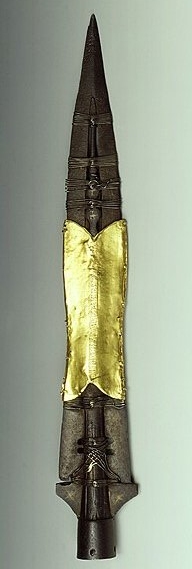
In both battles the Holy Lance played a crucial role. The Lance, said to be the one Centurion Longinus used to pierce Jesus' side on the cross (the blood curing his blindness and convincing him to convert), had been given to Henry by its previous custodian, King Rudolf II of Burgundy.

A hugely significant relic in terms of establishing the credibility of the Ottonians, it was displayed during the sessions of prayer held before both battles.

Wednesday, January 30, 2013

Corporate Sustainability - Face-Saving Window Dressing?

Over the past decade, corporate sustainability has become a must-have for every international company, an essential part of their global branding platform.

Despite the billions invested in it, few companies' environmental talk is matched by their walk, as business tweeter Ramon Arratia argues in The Corporate Sustainability Beauty Contest on CSRWire.

Arratia argues that company CEO's are deluding themselves about their sustainability credentials:
A 2010 Accenture survey of global CEOs found that 81 percent thought sustainability issues were ‘fully embedded’ into the strategy and operations of their company. They really think that having a CSR team reporting to public affairs with a nicely designed 150k report with some cherry-picked case studies and a set of qualitative targets plus a few quantitative targets on quick wins is ‘fully embedded’!
He suggests a three point approach--focusing on the footprint of products rather than the image of companies.

It is a challenge to high-profile PR programmes like last week's announcement of The Global 100: World Leaders in Clean Capitalism (by Corporate Knights), which lists two oil companies in its top 5 and is (unsurprisingly) heavily weighted toward Western, wealthy north European countries.

One of the ironies of  growing "environmental awareness" is that--in terms of perceptions--saving the planet has become just another capitalist scam.

Wednesday, March 02, 2011

No More Guttenberg


No more Guttenberg is probably premature as he's likely to be back before long.

After two weeks' kerfuffle about his copy 'n pasting his doctrorate, KT zu Guttenberg wasn't left a lot of options, although Chancellor Merkel seemed happy for him to stay.

But when Professors at your old university start calling you a Betrüger (fraud, impostor), when political enemies in your own party are saying how ashamed they are, and the country's tabloids are writing about nothing else, staying on as a minister soon becomes untenable.

If he lies low for a bit and shows a bit of remorse (so ill-suited to his brand before, but necessary now), he'll be well placed to take over in the CSU in Bayern. From there, a bid for the Chancellorship itself is far from unfeasible.

His head-turning popularity among German voters will likely make him think along such lines.

Tuesday, August 31, 2010

Too Young To Burn

Too Young To Burn by Sonny and the Sunsets

White Fright

Christopher Hitchens, writing on Slate, says white America is waking up to the fact it may soon be a minority, but contrasts the pious Glenn Beck crowd to its more sinister counterparts in Europe.

http://www.slate.com/id/2265515/pagenum/all/#p2

12 Step Sustainability Plan

Preetum Shenoy, writing on Sustainability.com, describes people living in western consumer societies as addicts who have yet to admit they have a problem:

http://www.sustainability.com/blog/a-twelve-step-program-for-unsustainable-consumption

Thursday, January 21, 2010

Geert Wilders

The trial of Geert Wilders in Holland is curious, an attack on freedom of speech in a country where freedom of speech was pioneered.

The most striking aspect of the case is that it is explicitly not about truth. The Dutch ministry has written:

“It is irrelevant whether Wilder’s witnesses might prove Wilders’ observations to be correct, what’s relevant is that his observations are illegal...”

The illegality rests on whether his statements offend Muslims or incite violence against Muslims.

I've pasted the two laws Wilders is alleged to have broken below:

Article 137c Dutch Penal Code

1. He who publicly, verbally or in writing or image, deliberately expresses himself in an way insulting of a group of people because of their race, their religion or belief, or their hetero- or homosexual nature or their physical, mental, or intellectual disabilities, will be punished with a prison sentence of at the most one year or a fine of third category.

2. If the offence is committed by a person who makes it his profession or habit, or by two or more people in association, a prison sentence of at the most two years or a fine of fourth category will be imposed.

Article 137d Dutch Penal Code

1. He who publicly, verbally or in writing or in an image, incites hatred against or discrimination of people or violent behaviour against person or property of people because of their race, their religion or belief, their gender or hetero- or homosexual nature or their physical, mental, or intellectual disabilities, will be punished with a prison sentence of at the most one year or a fine of third category.

2. If the offence is committed by a person who makes it his profession or habit, or by two or more people in association, a prison sentence of at the most two years or a fine of fourth category will be imposed.

Thursday, September 17, 2009

Utopia: Rules with Wiggle-Room

The utopia most people want is a rules-based life, with wiggle room, writes Daniel Henninger in the Wall Street Journal.

Henninger contrasts the primal world of sports, governed by clearly-defined rules, with real life, in which no one knows the rules anymore.

The problem being that in real life we lack a final arbiter, so that wiggle-room has the tendency to expand, exponentially, each time a rule is challenged.

http://online.wsj.com/article/SB10001424052970204518504574416774102132370.html

Muslim Creationism

Just to show Creationism isn't the exclusive preserve of Christian fundamentalists, here's an article (from this month's New Humanist) exploring Muslim Creationism.

http://newhumanist.org.uk/2131

Thursday, November 20, 2008

NATO Spy For Russia Unmasked

Link to my article on CNSNews.com today:

Dusseldorf, Germany (CNSNews.com)
– A senior Estonian government official is under arrest and being investigated for allegedly passing NATO and European Union secrets to Russia.

A spokesman for Estonia’s Defense Ministry confirmed to CNSNews.com on Wednesday that the man had been “caught for having revealed classified information” and said Estonia had given a “firm commitment to cooperate” with a NATO investigation.

Herman Simm, 61, who was responsible for handling classified and top secret material in the Baltic state’s capital, Tallinn, reportedly had access to “nearly all” documents circulated within NATO and the E.U., the German magazine Spiegel reported.

Simm headed government discussions in bilateral talks on protecting secret data flow.

He was also central to negotiations aimed at protecting the E.U. and NATO’s handling of sensitive information and was in charge of granting security clearances.

Intelligence that may have been compromised includes information relating to the controversial U.S. missile shield plans, a cyber protection program, the response to Russia’s actions in Georgia, and all NATO operations, from Kosovo to Afghanistan.

Simm was allegedly approached to become a Russian “mole” or “sleeper” at the end of the 1980s, Estonian politician Jaanus Rahumaegi, who leads the oversight committee for the government security agency, told Spiegel. At that time Estonia was still part of the Soviet Union.

Later, when the issue of Estonia’s NATO membership came onto the agenda, Simm in the mid-1990s “was officially recruited by the Russian government,” Rahumaegi said.

Estonia joined both NATO and the E.U. in 2004.

As European and NATO investigations proceed, the case is proving a major international embarrassment. The security breach is feared to be the worst since CIA counter-intelligence expert Aldrich Ames was exposed as a Russian spy in the early 1990s.

As of Tuesday, neither NATO nor the E.U. has commented on the case. Neither has a defense lawyer acting on behalf of Simm.

Estonian Ministry of Defense spokesman Martin Jasko said Wednesday that “no country is honoured by the fact that its citizen has been caught for having revealed classified information.”

Speaking on behalf of the government, he said its “firm commitment to co-operate in investigating Simm’s treason proves to NATO that it can be considered a responsible and trustworthy member state. Accordingly, we believe that Estonia’s reputation as a NATO partner is even stronger.”

Simm is said to have used a primitive converted radio transmitter to set up secret meetings with his contact man, known as “The Spaniard” because he posed as a Spanish businessman.

In a throwback to Cold War working practices, Simm operated together with his wife, Heete. A former lawyer in the national police headquarters, she has also been detained, charged with being an accessory to treason.

The Simms were originally detained on Sept. 21, but the case has been kept low-key. They will likely be arraigned early next year.

Herman Simm was a senior figure in the Estonian government. In 1994 he worked as Estonia’s chief of police, and later, he became a department head in the Defense Ministry.

He was in charge of secret coordination between NATO and the E.U.

When Estonia joined the E.U. and NATO, Simm’s value to Russia dramatically increased, as he was on the circulation list for highly sensitive NATO and European material.

An official quoted by Spiegel described Simm as a “big fish” who “gave the Russians practically everything NATO and the E.U. passed between them.”

Simm apparently made a fortune selling military secrets to the Russian Foreign Intelligence Service SVR, the successor to the KGB.

He first drew suspicion to himself when he bought a portfolio of expensive property, including an opulent villa outside Tallinn and a farmhouse on the Baltic Sea.

His contact man then became careless in trying to recruit a second Estonian spy, who promptly reported it to Estonian intelligence. Following the trail of “The Spaniard” led investigators to Simm and his access to sensitive material within NATO.

Russian media reports on the case say it highlights the lack of security of Estonia’s handling of intelligence and sensitive information.

Estonia, described by NATO Secretary General Jaap de Hoop Scheffer as “NATO’s most IT-savvy nation,” is a country of just 1.3 million people. Much government and commercial business is conducted online. People vote and pay taxes on the Internet, and government meetings involve virtually no paperwork.

When Estonia infuriated Russia by removing a Soviet war memorial in 2007, the country faced a vicious wave of Web-based attacks. Estonia has been lobbying hard to put cyber-defense on NATO’s agenda and set up a Cyber Defense Center in Tallinn, which is meant to help the alliance as a whole – a project that may now be compromised.

The ongoing NATO/E.U. investigation is being conducted by NATO’s Office for Security, headed by Michael Evanoff, an American.

Tuesday, November 18, 2008

German Government Likely To Bail Out GM-Subsidiary Opel

Link to my article on CNS News today:

Dusseldorf, Germany (CNSNews.com) – As the global financial crisis lashes the auto industry, Germany’s federal and state governments look set to bail out Opel, a subsidiary of General Motors Corp., with a reported two billion euro ($2.6 billion) rescue package.

Opel’s German management, which requested the aid, is struggling with a cash-flow crisis.

German managers point to failings at GM’s insolvency-threatened U.S. head office in Detroit. They claim they are back-owed billions of dollars in investment. Germany’s GM-Opel management is also considering breaking away from General Motors Corp. should it apply for insolvency. Opel employs more than 25,000 people in the German states of Hessen, Thuringen, North-Rhine Westphalia and Rhineland-Pfalz.

Chancellor Angela Merkel called for an emergency meeting in her office on Monday afternoon to discuss options with GM’s European president, Carl-Peter Forster, GM-Opel chairman Hans Demant, and union boss Klaus Franz. Also attending were Finance Minister Peer Steinbruck and Minister for Economic Affairs Michael Glos.

Proposals on the table include a federal bond or guarantee of around $1 billion. This would be supplemented by another $1 billion guarantee from the four affected German states. The funds are reportedly needed to allow the cash-strapped company to continue manufacturing and to pay its creditors.

Read on here.

Thursday, November 13, 2008

Germany To Obama: No More Troops For Afghanistan

Link to my article which appears on CNS News today:

Dusseldorf, Germany (CNSNews.com) – Germany has been effusively supportive of Barack Obama – opinion polls showed he had the backing of 85 percent of the population – but early signs of strain are showing with Chancellor Angela Merkel. She has warned the president-elect that she will turn down any request for more German troops in Afghanistan.

Merkel’s coalition partners in the socialist Social Democratic Party (SPD) are also sounding warning bells. In the build-up to national elections next September, however, the government is downplaying any potential for differences with Obama.

Read the rest of the article here.

Wednesday, November 12, 2008

Europe Pressures Obama Ahead of G20 Summit

Link to my article which appears on CNS News today:

Dusseldorf, Germany (CNSNews.com) – As European leaders prepare to attend the G20 meeting in Washington later this week, they are stepping up pressure on President-elect Obama to support their plans on both international finance and climate change. The meeting is the first of a series of summits proposed by President Bush, French President Nicolas Sarkozy and the president of the European Union’s executive Commission, Jose Manuel Barroso, to address the global financial crisis.

The E.U. is planning sweeping reforms for the international financial system, involving a total overhaul of the 60-year old International Monetary Fund (IMF). The proposals include stricter regulation of hedge funds and cross-border financial institutions, a clampdown on tax havens, and a global “early warning” system. European governments have already pledged roughly two trillion euros ($2.5 trillion) in cash injections, bank deposit guarantees, interbank loan coverage and partial or full nationalizations in an attempt to minimize consumers’ concerns about the crisis.

Alongside these wide ranging proposals, officials say the E.U. remains committed to aggressive investment in measures to combat climate change, and – encouraged by Obama’s election – will be aiming to secure increased U.S. support. Saturday’s meeting aims to emulate the Bretton Woods conference in the latter stages of World War II, which established the IMF and the World Bank Group with the objective of preventing a repeat of the 1930s worldwide economic meltdown.

Expected participants include leaders of the Group of Eight leading industrialized countries – the U.S., Canada, Britain, France, Germany, Italy, Japan and Russia – together with those of emerging economies such as China, India, Brazil and South Africa, as well as Saudi Arabia, South Korea and Australia.

Wednesday, November 05, 2008

European Leaders Cheer Obama Victory

Link to my article which appeared on CNS News on November 5th:

Dusseldorf, Germany (CNSNews.com) – The election of a new American president always prompts diplomatic congratulations from European leaders, but Barack Obama’s victory prompted effusive reactions on Wednesday.

His victory was an outcome few here doubted and most wished for.

Many of the messages were little more than bland bromides – the Europeans expressing hope that Obama will restore the sense of common purpose many believe was damaged during the Bush presidency.

The president of the European Union’s executive Commission, Jose Manuel Barroso, spoke of “a time for renewed commitment between Europe and the United States of America,” adding that this would be “for the benefit of our societies, for the benefit of the world.”

Pointing to the global financial crisis, Barroso called for “a new deal for a new world.”

A similar message came from French President Nicolas Sarkozy: “With the world in turmoil and doubt, the American people, faithful to the values that have always defined America’s identity, have expressed with force their faith in progress and the future.”

Sarkozy, who also holds the rotating European Union presidency, said the election had “raised enormous hope in France, in Europe and beyond.” And to Obama, he said, “By choosing you, the American people have chosen change, openness and optimism.”

German Chancellor Angela Merkel said she looked forward to Europe and the U.S. working together “closely and in a spirit of mutual trust ... to confront new dangers and risks and ... seize the opportunities presented by our global world.”

Dutch Prime Minister Jan Peter Balkenende said that in addition to confronting “the financial crisis and worsening economic situation” the next U.S. administration would also need to address “the struggle against terrorism, climate change, human rights and free world trade.”

British Prime Minister Gordon Brown said Obama had run “an inspirational campaign, energizing politics with his progressive values and his vision for the future.” He said the relationship between the U.S. and Britain was “vital to our prosperity and security.”

Italian President Giorgio Napolitano said he looked forward to a renewed partnership in “the cause of freedom, of peace, of a secure and unified, just world order.”

Vatican spokesman Father Federico Lombardi voiced the hope that Obama as president would “be able to meet the expectations and hopes directed at him.”

The Vatican also hoped that Obama would respect “essential human and spiritual values,” Lombardi said.

Although the Holy See did not weigh in during the election campaign, a number of Catholic bishops in the U.S. did raise concerns about Obama’s liberal views on abortion, saying the issue should outweigh others for Catholic voters.